
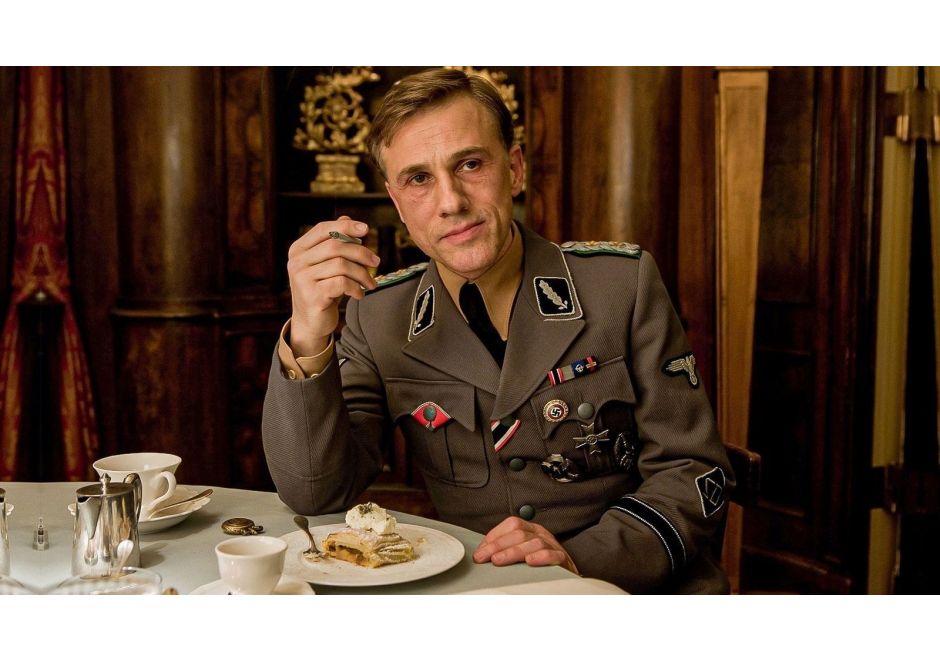
Dialogue is where a screenwriter gets to shine most.
Even when the film has big setpieces and outlandish scenarios, it's certain lines and quips that stick in audiences' minds. In the same way you'll sing along to your favorite song, people are always quoting lines from their favorite movie. How many times have you heard someone quote a line from Pulp Fiction or The Dark Knight?
Dialogue is also an opportunity for a beginner screenwriter.
A spec script is a showcase for your writing and, in many cases, it will be your introduction to industry professionals. Good or even great dialogue can help give your script an extra edge or X factor that distinguishes your screenplay in the film and television marketplace. It establishes you as more than just a writer with an idea, but one with a voice, and many A-list screenwriters, from Diablo Cody to Quentin Tarantino, ascended in the industry by doing just that.
Learning how to write dialogue at that level starts with knowing exactly what separates it from dialogue that simply moves the plot along. It also means avoiding several mistakes.
Common Dialogue Mistakes
Weak dialogue often follows the same pattern, regardless of genre: the same flaws appear again and again (sometimes even in produced films). Before you can learn how to write good dialogue, you need to look out for the following common mistakes:
Stilted or Unnatural Dialogue
This is dialogue that doesn't sound like the way real people speak. Characters state their intentions in full sentences, finish each other's thoughts too neatly, and never interrupt, stumble, or trail off the way real conversation does. The goal is to make a character's dialogue sound like they're composing a thought in real time. When you're out or interacting with people, listen to how they speak. The more you pay attention to this, the easier it'll be to recreate.
Characters Who All Sound the Same
This usually happens when a writer leans on their own natural speech pattern for every character, without building a distinct one for each. Think: dialogue = character. By doing this, you'll start to see that every character is unique, and their dialogue reflects who they are. If one character curses, their foil or competitor shouldn't. If one character is longwinded, another should speak minimally. This is a foolproof way to make your characters distinct.
Lack of Subtext
Characters say exactly what they mean with nothing beneath the surface. This not only makes your character one-dimensional, but it also drains scenes of tension. Subtext gives a character complexity and adds another layer to a situation or relationship. It also makes your reader feel smart: they get to notice what a character won't admit, which is a far more active experience than being told outright.
Flat, On-the-Nose Exposition
Exposition is often required in a script because the reader needs the information. Not a bad storytelling device in and of itself, but oftentimes expository dialogue comes across as flat or too on-the-nose. This is usually because the writer hasn't considered how the character would say this in a real-life conversation. Thus, this is an extension of avoiding stilted dialogue. Play with the words, the phrasing, perhaps throw in an interruption, and let the information be imparted organically and even a little imperfectly.
Too Much Dialogue
Wordy dialogue buries the one line that matters under six that don't. This isn't the same as digressive dialogue used with purpose (something Quentin Tarantino is a master at). It comes down to what all these extra words are bringing to the table: are they especially entertaining or revealing something important about your character? If not, trim the dialogue to only what's essential.
That's what to avoid. Below is what to do.
These five screenplay dialogue examples show how the most acclaimed screenwriters sidestepped these common mistakes and wrote great lines that led to richer characters and classic films:
Anora: Distinct and Naturalistic Dialogue
Sean Baker's Anora showcases distinct and naturalistic dialogue throughout. Read the following exchange in which one character casually floats out the idea of marriage (in order to gain U.S. citizenship):
IVAN
If I got married to an American, I would never have to go back.
ANI
Yeah, who would you marry?
IVAN
I don't know... Crystal? Your friend Lulu? She's hot.
They laugh.
IVAN (CONT'D)
You?
ANI
(mocking his accent)
You?
They laugh.
IVAN
It is Vegas. Don't people get married in Vegas?
ANI
Don't f*** around.
IVAN
I'm not f***ing around.
ANI
Ok, well then go get married.

The exchange is distinct because both characters have their own voice and agenda: Ivan is angling for citizenship; Ani, a real marriage. It's naturalistic because they don't state their real feelings outright. Ivan plays it cool as he proposes, floats a couple of names, then lands on "You?" This is how a young man, not entirely sure of the woman's feelings, would go about it: they test the water with a joke that's really the truth; the tone light enough to walk back.
Likewise guarded, Ani doesn't answer the question. She mocks the way he asked it and his accent. Her lines are short, blunt, and reactive. She never declares anything; she challenges what's been presented to her. Is it real or is it just bullshit? She bides her time to find out.
Even the laughter is doing work during this exchange. Not only does it add to the naturalism, but it also emphasizes the characters' youth and how they use humor to cope with growing intimacy and commitment.
The Social Network: Different Characters Having Their Own Voice
The Anora scene works with two voices in close conflict. A full ensemble is a bigger challenge: every character in the room needs a voice specific enough that a reader can follow who's talking.
Aaron Sorkin's The Social Network shows how three characters can occupy the same scene without ever blurring into each other:
EDUARDO
Settle an argument for us, would you? I say it's time to start making money from the Facebook but Mark doesn't want advertising. Who's right?
SEAN
Neither of you yet. The Facebook is cool, that's what it's got going for it.
MARK
Yeah.
SEAN
You don't want to ruin it with ads because ads aren't cool.
MARK
Exactly.
SEAN
It's like you're throwing the greatest party on campus and someone's telling you it's gotta be over at 11:00.
MARK
That's exactly right.
SEAN
You don't even know what the thing is yet.
MARK
I said exactly that.
SEAN
How big it can get and how far it can go. This is no time to take your chips down. A million dollars isn't cool. You know what's cool?
EDUARDO
You?
SEAN
A billion dollars.
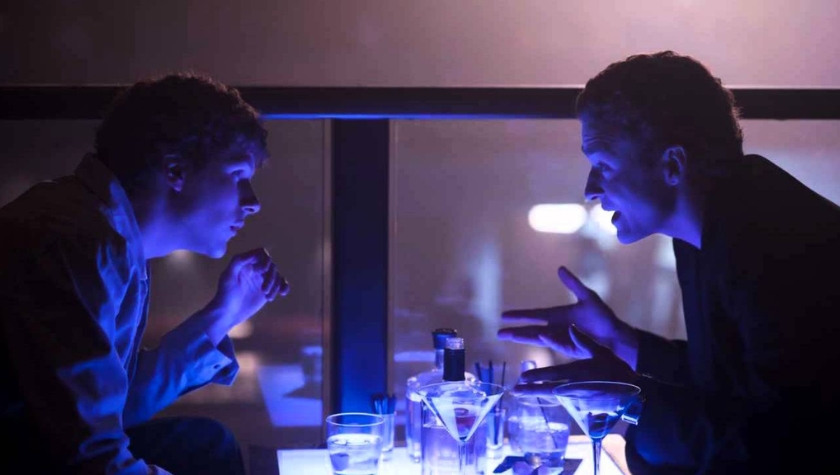
Sean doesn't answer Eduardo's question as much as he reframes it. The billion-dollar line lands because it dodges the ad argument entirely and replaces it with a bigger one. His sentences build in escalating rhythm, building to a pitch he's already worked out, and directed at the person in the room he knows is the one worth convincing. Sean never talks to Eduardo. He talks around him, straight to Mark.
Mark's four short lines reveal the effectiveness of the pitch. "Yeah." "Exactly." "That's exactly right." "I said exactly that." The validation acts as a backing choir. Mark spends the whole exchange confirming Sean, and it's the first moment in the script where someone talks, and Mark doesn't feel the need to correct them. He's clearly under Sean's spell and sees him as a kindred visionary.
Eduardo's lines show him out of his depth between two "big picture" guys. He's thinking of ads and quickly grows skeptical of Sean. Eduardo attempts to take him down a notch with the "You?" quip, but it gets swiftly co-opted as a dramatic beat before "A billion dollars."
Three characters, three voices, and multiple dynamics at play.
There Will Be Blood: Using Subtext Instead of On-the-Nose Exposition
Subtext is the difference between characters announcing their intentions and indirectly negotiating what a scene is really about. Paul Thomas Anderson's There Will Be Blood stages an entire power struggle inside what looks, on its surface, like a business conversation:
DANIEL
What would you like, Eli?
ELI
I think that you should share the mineral rights with my Church. You've given us the farming rights, now why not share the mineral rights?
DANIEL
If we decide to drill for oil, if the well begins to produce, I'll give your Church a five thousand dollar signing bonus.
ELI
That's not enough.
DANIEL
Do you want to find someone else that's gonna come up here and drill? I can hunt for quail on another ranch just as easily as I can here.
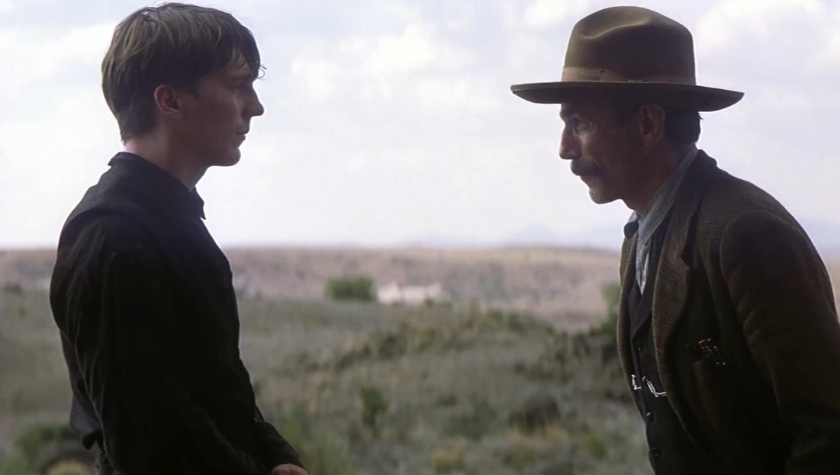
Money is the surface. Underneath it, Eli is testing whether he can claim a piece of Daniel's power before he completely takes over the land. The church stands in for Eli himself, and asking for mineral rights is really asking to be treated as an equal: church and commerce.
Daniel's number is a lowball designed to see whether Eli folds. When he doesn't, Daniel doesn't get angry. He threatens to walk, using the same cover story, hunting for quail, that he already used to deceive Eli's father Abel in a previous scene. Without saying it, he's telling Eli: I can lie to your family again, and you can't stop me.
The power test, the mutual sizing-up, the callback lie: all of it comes down to two men negotiating a number that both know isn't the real subject. This engine drives their entire relationship for the rest of the script, established here in five lines about a signing bonus.
Inglourious Basterds: Reveal Character Instead of Flat Exposition
Quentin Tarantino's Inglourious Basterds shows how an interrogation can be used to determine a location for a pinnacle event in the script, but also reveal the traits and methods of the characters:
COL. LANDA
So, Mademoiselle, you were beginning to explain...
SHOSANNA
(anxiously)
Up until a couple of days ago, I had no knowledge of Private Zoller or his exploits. To me, the private was simply just a patron of my cinema. We spoke a few times, but—
COL. LANDA
—Mademoiselle, let me interrupt you. This is a simple formality, no reason for you to feel anxious.
The strudel arrives. The colonel takes one look at it and says to the waiter:
COL. LANDA
I apologize. I forgot to order the crème fraîche.
WAITER
One moment.
He exits.
COL. LANDA
(referring to the crème)
Wait for the crème
(back to business)
So, Emmanuelle — May I call you Emmanuelle?
SHOSANNA
Oui.
COL. LANDA
So, Emmanuelle, explain to me how does it happen that a young lady such as yourself comes to own a cinema?
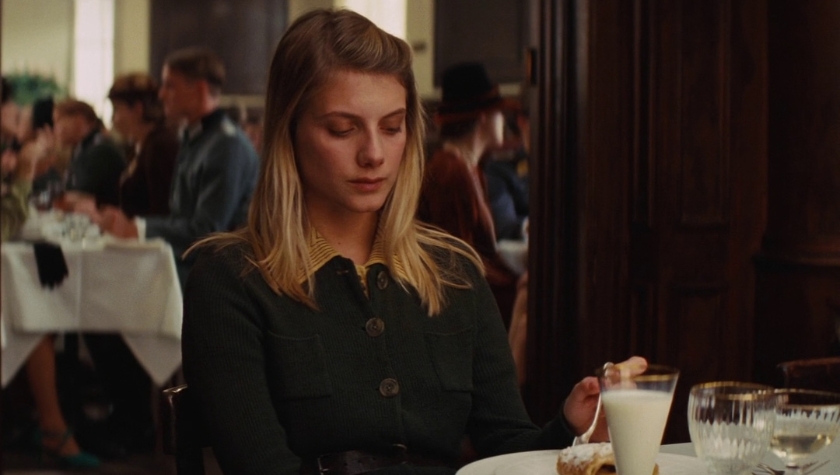
The crème fraîche is calculated: a small, manufactured disruption engineered to lower the temperature. An apology to a waiter, a little fuss over strudel, the most harmless kind of delay imaginable. It tells Shosanna this is a comfortable, ordinary lunch. That's the read Landa wants her to have, and it's a tactic we've seen from him before: in the opening interrogation at the farmhouse (which resulted in the murder of Shosanna's entire family).
This tactic shows Landa understands that comfort is the most effective interrogation tool, because a relaxed person talks more than a frightened one and doesn't notice what they've given away. The name request works similarly. He could simply call her Emmanuelle; the question is designed to give her a false sense of autonomy.
However, in a reversal of the opening scene, Shosanna never lowers her guard. Landa builds a gentle trap devised to make her relax and talk, and she still leaks only the anxiety she can't fully suppress. She plays along, says "Oui" to the name, and doesn't divulge anything more than she wants Landa to know. This is a woman who has survived her family's massacre and has kept her true identity hidden for years. She's doing it again here, over a strudel and interrogation, and we learn the extent of her discipline and willpower.
Lost in Translation: Cutting Dialogue to Only What's Essential
Economy is its own skill, and it might be the fastest way to improve a scene you've already written. Sofia Coppola's Lost in Translation shows how little dialogue a scene actually needs once it's stripped down to what's essential:
BOB
How long have you been married?
CHARLOTTE
Two years.
BOB
Try twenty-five.
CHARLOTTE
You're probably just having a mid-life crisis. Did you buy a Porsche?
BOB
I'm thinking about it.
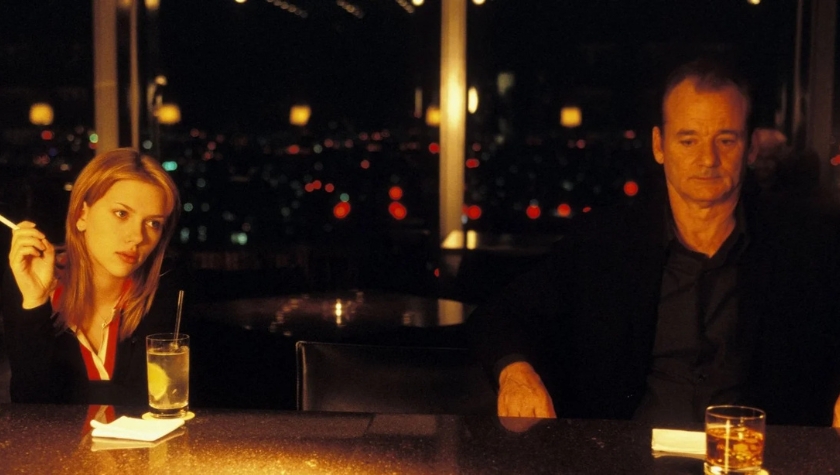
Bob's exhaustion, Charlotte's youth, the age gap between them, the flirtation, the self-aware humor about his crisis: all of this is conveyed in these five short lines. "Try twenty-five" does the work of a paragraph worth of backstory. The character tells, and subtext lies beneath the short, blunt statements, and the comedy comes from how fast the exchange moves past the emotional weight it's carrying.
Most scripts get wordier through revision, because writers add lines to clarify things they're worried readers might miss. Fight this instinct. Go back to a scene and ask what happens if you cut the line that explains the joke or the line that restates the goal. Almost always, the scene gets stronger the moment you trust the reader to catch up.
A useful test: if a line isn't doing at least two jobs at once (e.g., moving the plot and revealing character) it's a candidate for cutting.
Great Dialogue is Great Storytelling
What makes all the above dialogue examples great is that they trust the reader to get what's going on. In addition, every exchange sounds like real people, doesn't waste a word, and uses the space between what's said and what's implied to do the actual storytelling.
Dialogue is where a lot of readers decide, consciously or not, whether a writer can actually write. It's where craft becomes a voice on the page and illustrates to industry professionals you have the goods. It's what makes them think: 'Now here's a screenwriter!'
The next time you write an exchange, ask whether it sounds like two real people, in this moment, with everything they're not saying still being suggested. Also ask: is it revealing who your characters are? And most importantly: what is it adding to your story?
Because great dialogue is great storytelling, and this is something you should never forget when screenwriting: you're telling a story.
And your dialogue needs to be doing the same.